

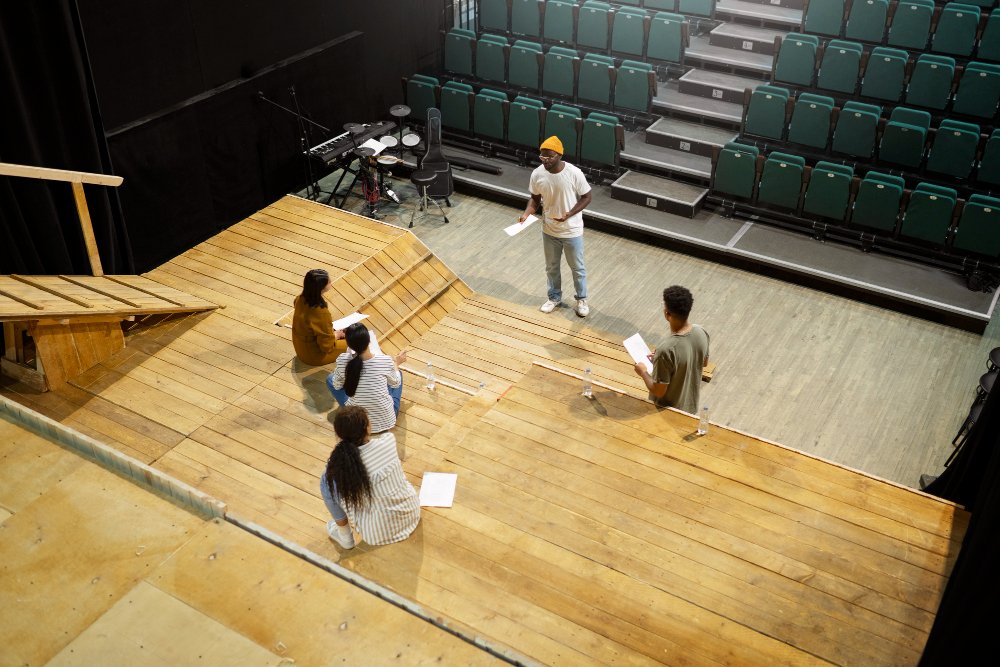
Introduction
Getting the stage right is one of the most important decisions you’ll make when planning an event. Choose well and everything else — the performance, the sound, the audience experience — is easier to deliver. Get it wrong and it creates problems that are very difficult to fix on the day.
This Stage Hire Guide is written for event organisers across the UK who want straightforward, practical advice. Whether you’re planning a corporate conference, a live music event, or a community festival, the same principles apply: the right stage needs to suit your audience, your performers, your site, and your budget.
By the end of this guide, you’ll have a clear picture of what to look for, what to ask your supplier, and what to avoid.
What Is Stage Hire and Why Does It Matter?
Stage hire is the rental of a temporary or modular stage structure for an event. Rather than purchasing a permanent installation, most event organisers hire a stage that’s specified and built to suit their particular requirements.
A well-chosen stage does several practical things for your event:
- Improves sightlines so the audience can actually see the performance
- Positions sound sources correctly for better coverage across the space
- Creates a clear focal point for the event layout
- Supports the safety of performers and crew when properly designed and installed

How to Choose the Right Stage for Your Event
Knowing how to choose the right stage for an event comes down to answering a few practical questions before you speak to any supplier.
1. What Is the Stage Being Used For?
The requirements for a live band are very different from those for a keynote speaker or a dance performance. Think about:
- Live music — needs a stage that can handle the structural load of PA systems, lighting rigs, backline, and drum risers
- Corporate presentations — typically requires a clean, uncluttered look with good integration for screens and a lectern
- Theatre or dance — often needs a flat, level surface and adequate wing space for movement and exits
- Outdoor festivals — requires weatherproofing, proper ground anchoring, and a structure that can be deployed and struck efficiently
2. How Many Performers Will Be on Stage at Once?
This directly affects the size you need. As a practical starting point:
- Solo performer: 4m x 3m minimum
- Small band (3–4 members): 6m x 4m
- Full band with backline and drum kit: 8m x 6m or larger
- Large ensemble or orchestra: 12m x 8m or more
3. How Large Is Your Audience?
Stage height and depth should be planned around how far back your audience will be. A stage that works well for 200 people in a field will be too low to be seen clearly by a crowd of 2,000.
4. Is the Event Indoor or Outdoor?
This changes the type of structure you need significantly — covered in more detail in the outdoor section below.
5. What Is the Ground Condition at Your Site?
Soft ground, slopes, and uneven surfaces all affect how the stage is anchored and supported. Share a site plan — or better still, a proper site survey — with your supplier before confirming anything.
What Size Stage Do I Need for My Event?
“What size stage do I need for my event?” is one of the most common questions we hear, and the honest answer is that it depends on a combination of factors. Here’s a practical reference to help you narrow it down.
Stage Size Reference Guide
| Event Type | Recommended Stage Size | Approximate Audience |
|---|---|---|
| Small private party or wedding | 4m x 3m | Up to 100 guests |
| Corporate conference or AGM | 6m x 4m | 100–300 delegates |
| Community event or local fête | 8m x 6m | Up to 1,000 attendees |
| Mid-size outdoor music event | 10m x 8m | 1,000–5,000 attendees |
| Large outdoor concert | 12m x 10m+ | 5,000+ attendees |
Allow for Wing Space
Many organisers focus entirely on the performance area and forget that performers, crew, and equipment need somewhere to go either side of the stage. Wings — the offstage areas to the left and right — are important for:
- Safe entry and exit for performers
- Storing backline, instruments, and flight cases
- Crew movement during the show
- Emergency access if required
A reasonable working rule: allow at least 2m of wing space on each side of your performance width.
Stage Height
Getting the height right depends on how deep your audience is:
- 0.6m–0.9m — works for smaller indoor events of up to 200 people
- 1.0m–1.2m — suitable for mid-size events of 200–1,000 people
- 1.4m and above — recommended for larger outdoor events where the back of the audience is a significant distance from the stage
What Type of Stage Is Best for Outdoor Events?
Outdoor events in the UK bring a specific set of challenges that indoor venues simply don’t have — and the stage structure needs to account for all of them.
For most outdoor events in the UK, the most practical option is a covered, ground-supported outdoor stage — often referred to as a festival stage or outdoor performance stage.

What Type of Stage Is Best for Outdoor Events?
Outdoor events in the UK bring a specific set of challenges that indoor venues simply don’t have — and the stage structure needs to account for all of them.
For most outdoor events in the UK, the most practical option is a covered, ground-supported outdoor stage — often referred to as a festival stage or outdoor performance stage.
Types of Outdoor Stage
1. Ground-Supported Stage (Festival Stage) The most widely used option for outdoor events in the UK. These are modular structures built from aluminium with an integrated roof system.
- Suitable for audiences from a few hundred to tens of thousands
- Can be configured in different widths and depths to suit the site
- The roof provides the weather protection that UK events genuinely need
- Designed to carry the load of professional PA and lighting systems
2. Trailer Stage (Mobile Stage) A self-contained stage unit built into a purpose-designed trailer that unfolds on-site.
- Well-suited to touring events, roadshows, and smaller community events
- Quick to deploy — typically 2–4 hours from arrival to ready
- No separate scaffolding required
- Smaller load capacity than a ground-supported stage, so less suitable for large productions
3. Covered Temporary Stage A flat deck stage with a separate canopy or marquee structure above it.
- A reasonable option for smaller outdoor events and garden parties
- Less robust in high winds — always check the wind rating carefully
- Often more affordable, but with limitations on what it can safely support
Key Practical Checks for Any Outdoor Stage in the UK
Given the British weather, these aren’t optional:
- Wind load rating — the structure should be certified to an appropriate standard such as BS EN 13814 for temporary structures
- Roof membrane quality — it will rain; the roof needs to handle it properly
- Ground anchoring method — ballast weights or ground stakes depending on the surface type
- Site drainage — water pooling beneath or around the stage creates both a safety hazard and an operational problem
How Much Does Stage Hire Cost in the UK?
How much does stage hire cost in the UK? The honest answer is that it varies considerably depending on size, type, duration, and location. Here’s a realistic guide to current pricing.
Indicative UK Stage Hire Costs
| Stage Type | Approximate Cost |
|---|---|
| Small trailer or mobile stage | £500–£1,500 per day |
| Mid-size ground-supported stage (8m x 6m) | £2,000–£5,000 |
| Large outdoor festival stage (12m x 10m+) | £5,000–£20,000+ |
| Full production stage with crew | £10,000–£50,000+ |
Important: These figures are indicative and typically exclude VAT, delivery, build crew labour, and any add-ons. Always ask for an itemised quote.
What Affects the Final Cost?
Several factors will push the price up or down:
- Location — London and the South East generally attract higher costs
- Duration — multi-day events tend to be more cost-effective per day than single-day hires
- Crew and labour — the cost of building and striking the stage can be comparable to the hire cost itself
- Additional equipment — PA systems, lighting, staging carpet, crowd barriers, and generator hire are often quoted separately
- Booking lead time — last-minute enquiries often come with a premium
- Time of year — summer weekends are peak period; demand is high and availability is limited
How to Get the Best Value
- Get at least three written quotes and compare them line by line — not just the headline figure
- Ask clearly what is included and what is charged separately, including delivery, installation, VAT, and insurance
- Book as early as you can, particularly for any event between May and September
- If you also need sound, lighting, and power, ask about package pricing — it often works out better than sourcing everything separately

What Size Stage Is Needed for a Concert?
Concert staging needs careful planning. What size stage is needed for a concert depends on the scale of the event, the audience size, and — critically — the performer’s technical requirements.
Concert Stage Sizes by Scale
Smaller Club or Venue Concert (under 500 capacity)
- Stage size: 6m x 5m to 8m x 6m
- Height: 0.6m–1.0m
- Often an in-house permanent stage or a smaller hired deck
Mid-Size Outdoor Concert (500–5,000 capacity)
- Stage size: 10m x 8m to 12m x 10m
- Height: 1.0m–1.4m
- Requires a ground-supported roof structure
- Needs dedicated space for PA wings and monitor position
Large-Scale Concert or Festival (5,000–50,000+ capacity)
- Stage size: 15m x 12m to 20m x 16m or beyond
- Height: 1.4m–2.0m or more
- Involves extensive production infrastructure including delay towers and a front-of-house position
Check the Artist’s Technical Rider
Professional acts — including mid-level touring artists — will have a technical rider that sets out minimum stage dimensions, power requirements, and crew access needs. Your stage hire must meet these requirements. If it doesn’t, the artist or their production team has grounds to refuse to perform.
Request the rider as early as possible in the planning process and share it with your stage hire company before confirming any booking.
Practical Tips and Common Mistakes to Avoid
What Works Well
- Book early. Reputable stage hire companies book up quickly, particularly for summer weekends. For mid-size events, aim to secure your stage at least 8–12 weeks in advance. For larger festivals, 6 months or more is sensible.
- Do a site visit with your supplier. Walking the site together prevents problems with soil conditions, access routes, underground services, and anything else that doesn’t show up in a photo or a plan.
- Sort your licensing early. Outdoor events in the UK often require a Temporary Events Notice (TEN) or a premises licence. Your local authority may want to see structural calculations and a risk assessment for the stage before they’ll approve the event.
- Build in enough time for the stage to go up. A large outdoor stage can take one to three days to erect. That needs to be factored into your venue access schedule from the start.
- Confirm the insurance position. Your supplier should hold Public Liability Insurance — £5 million is a standard minimum — and the stage structure itself should be covered under their policy. Get this confirmed in writing.
What to Avoid
- Underestimating the size you need. A stage that’s too small means cramped performers, equipment that doesn’t fit, and a show that looks wrong from the start.
- Ignoring load capacity. Professional PA systems and lighting rigs are heavy. The stage structure needs to be rated to handle the weight safely.
- Skipping the structural sign-off. For larger stages, a structural engineer’s approval is a requirement, not an option — and many venues and local authorities will ask for it.
- Forgetting about power. Stages need significant electrical supply. Generator placement and cable runs need to be planned early, not on the day.
- Overlooking accessibility. Stage access ramps and steps for performers and crew with mobility requirements are regularly forgotten until it’s too late to sort properly.
FAQ
How far in advance should I book stage hire for a UK event?
For small to mid-size events, book at least 6–8 weeks ahead. For larger outdoor concerts or festivals — especially summer dates — 3–6 months gives you the best chance of securing the right supplier with enough lead time to plan properly.
Do I need planning permission for a temporary stage?
In most cases, a temporary stage for a short event does not require full planning permission. However, you will likely need a Temporary Events Notice (TEN) from your local council. Events with larger audiences or longer durations may require a premises licence. Check with your local authority early — it takes longer than most people expect.
What safety certifications should a stage hire company have?
Look for companies that are members of the Production Services Association (PSA) or the National Outdoor Events Association (NOEA). Temporary structures should comply with relevant standards such as BS EN 13814, and your supplier should be able to provide structural calculations and a risk assessment as a matter of course.
Can stage hire include sound and lighting?
Yes — many stage hire companies in the UK offer production packages that include PA systems, lighting, stage monitoring, and power. Bundling these together often works out more cost-effective and removes the risk of compatibility issues between systems hired from different suppliers.
What happens if it rains during my outdoor event?
A properly specified outdoor stage will include a weatherproof roof membrane and guttering to manage rainfall effectively. Ask your supplier for the weather and wind rating of the structure, and always include a contingency plan — including evacuation procedures for performers and audience — in your event risk assessment.
Conclusion
Getting the stage right takes a bit of planning, but it’s worth doing properly. The right stage makes everything else easier to deliver — the performance, the sound, the flow of the event. The wrong one creates problems that are difficult and expensive to fix once the event is underway.
To summarise the key points from this Stage Hire Guide:
- Match stage size to your audience and performer requirements — use the reference tables in this guide as a starting point, not a shortcut
- Choose the right type of stage for your environment — outdoor events in the UK need structures built for British weather
- Budget for the full picture — build crew, delivery, and production add-ons are part of the real cost
- Book early and get itemised quotes from at least three suppliers
- Confirm safety, insurance, and licensing requirements before anything is confirmed
If you’re planning an event and want straightforward advice on staging, sound, or AV, get in touch with the Spotlight Sound team. We’ll help you work out what you actually need, give you a clear quote, and make sure the technical side is properly sorted — before, during, and after your event.


