

Introduction
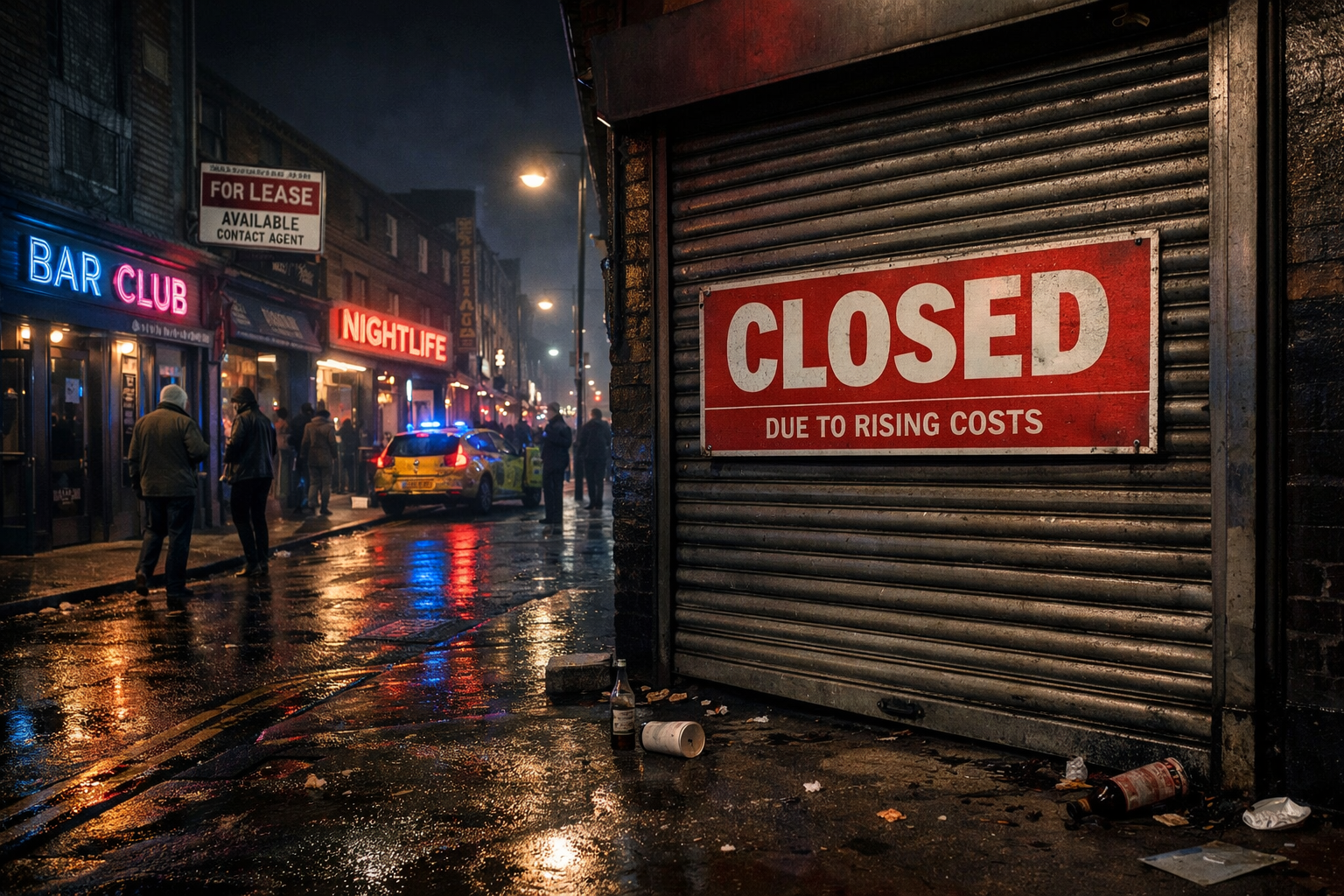
The UK nighttime economy is under serious threat. Bars and clubs are closing at an alarming rate, and the people running them have never felt more demoralised.
Sam Dimond, owner of Spotlight Sound — a company that works with bars, clubs and venues across the UK installing sound, lighting and visuals — has spoken about this issue on ITV and in national newspapers. On his After Dark: The Nightlife Economy podcast, he sat down with one of the most authoritative voices in the sector: Sacha Lord, Night time Economy Advisor for Greater Manchester and Chair of the Nighttime Industries Association.
Sacha has been in the sector for 30 years and is best known for founding Warehouse Project and Parklife Festival. In this conversation, he lays out exactly what is happening to UK nightlife, why it is happening, and what needs to change.
How Bad Is the Crisis Right Now?
According to Sacha Lord, the sector has never felt more demoralised — and he has been working on the front lines of the nighttime economy for 30 years.
“If we have never felt more demoralised now than any other time that I can remember,” he said, describing the current climate as a perfect storm.
In Essex, where Sam Diamond is based, closure rates are higher than the national average. Nationally, the picture is stark: the UK is losing one pub a day.
Sacha illustrated the human cost with the story of a landlord in Coventry — a man who has lived above his pub for 13 years, whose children were born there, and who is now planning to hand his keys back in January. His finances are in tatters, his mental health is suffering, and his relationship with his wife is, in Sacha’s words, “sellotaped together.” He is also losing his home.
“This could have been prevented,” Sacha said.
The nighttime economy is the fifth biggest industry in the whole of the UK and the third largest employer. Yet it is not getting the recognition it deserves.
2. What Is Causing Bars and Pubs to Close?
Sacha is clear that the crisis is not down to one single factor — it is a combination of things hitting at the same time.
The Cost of Living Crisis
The most obvious pressure is the cost of living crisis. People do not have the money they used to, and going out for a pint or a meal is a luxury. When people’s pockets are shrinking, luxuries are the first thing to be cut.
Sacha’s friend, who owns a well-known and popular restaurant in Manchester, is still busy on a Saturday night — but he has noticed that the reason people come out has changed. They are no longer going out casually. They are going out for a specific reason: an anniversary, a birthday, or some other form of celebration.
The Price of a Pint
The sector is being forced to price itself out. The average price of a pint in Greater Manchester is £6.50. In London, it is £7.40. A friend of Sacha’s recently paid £8 for a pint in London, which he described as completely unheard of.
People tend to blame the landlord for charging those prices. But once you take out the alcohol duty, the VAT, the cost of the beer, the utility bills, and the cost of staff, every pint sold now generates an average of only 12p profit. Venues are not overcharging out of greed. They are being forced into those prices just to keep the lights on.
The National Insurance Hike
Since the last budget, the increase in National Insurance contributions has led to over 100,000 job losses in hospitality. The vast majority of those jobs were held by young people — 18 to 20 year olds who had Saturday jobs in pubs to support themselves through college or university. Those jobs have gone.
Business Rates
Business rates have been a disaster. Sacha gave the example of a landlady who runs a small pub in Cornwall. Her business rates went from £18,500 to £73,000 as a result of the revaluations. Given the 12p profit per pint, Sacha said her business is finished. It is untenable.
The Budget: The Most Unhelpful Budget for Hospitality Ever
Sacha described the recently announced budget as “the most unhelpful budget for hospitality that I’ve ever heard of.” His phone has been off the hook ever since the announcement.
What the Government Should Have Done
- Lowered VAT. The UK charges 20% VAT, the same as every other sector. Across Europe, hospitality has a specific VAT rate of between 7% and 8%. Sacha was lobbying to reduce it to 15%. The previous government — coming out of COVID — dropped VAT to 5%, then nudged it to 12.5%. The chancellor at the time, who later became Prime Minister (Rishi Sunak), was credited with saving many businesses and jobs. The sector is still carrying a lot of COVID debt.
- Reversed the National Insurance hike. Which has already cost over 100,000 jobs — predominantly among young people.
- Reformed business rates properly. Instead, the revaluation has led to bills that some operators simply cannot pay — the Cornwall example being rates rising from £18,500 to £73,000.
None of those things happened. In Sam Diamond’s words, it feels like “a very anti-hospitality budget.”
How Socialising Habits Have Changed Since COVID
Bars and clubs were the first businesses to close during COVID and the last ones to reopen. They were completely shut for 18 months to two years.
Sacha noticed this change himself before he sold Parklife and Warehouse Project last year. Young people — those who should have been having the time of their lives, partying and going to clubs and festivals — were locked down during that period. Their habits shifted to WhatsApping friends and gaming. That has permanently changed the narrative for a portion of that generation.
People are no longer heading out simply because it is a Friday evening. As Sam put it, there now needs to be “a big kind of destination, a big reason to go out.” People go out for a purpose, an activity, or an experience.
The Venues That Are Surviving
It is the venues that are offering something a bit different that are busy.
Sacha pointed to Flight Club as an example of huge success across the UK, including in Manchester. He also mentioned a venue in Manchester where customers can go in, have drinks, and then throw axes at wood. He noted that alcohol and axes is not necessarily a great mix, but it draws a crowd.
More broadly, pubs are putting on live music, quizzes, and darts competitions. The venues offering something more, something different, are the ones faring better than others.
In Sam’s words, the landlords now have to work a lot harder for less. They cannot simply offer a standard experience and expect people to come through the door. There are also more pop-ups and community-led projects helping draw people into venues.
What the Government Needs to Do
- Lower VAT for hospitality — from 20% toward the European rate of 7–8%, with an initial ask of 15%.
- Reverse the National Insurance hike — which has already caused over 100,000 job losses.
- Genuine business rates reform — not the revaluation that has left some operators with bills four times higher than before.
Sacha also raised a broader point about fairness. A small family-run café in Altrincham probably paid more corporation tax last year than the whole of Starbucks UK — because Starbucks and Caffè Nero siphon their money off to non-tax jurisdictions. He said it angers him that this is allowed, and he is happy to call those brands out by name. The system is broken, and it places independent operators at a fundamental disadvantage.
Is Manchester a Blueprint for the Rest of the UK?
Sam asked whether Manchester could serve as a model for other cities. Sacha, who acknowledged he is biased as a “Mank,” believes it can.
Manchester has been called the UK’s capital of nightlife by the Sunday Times. The city was in Tier 3 longer than any other city region during COVID — and when it came out of Tier 3, it hasn’t stopped partying.
The Parklife example speaks for itself. At the time, the festival had a capacity of 80,000. It would normally sell out within three to three and a half months. When tickets went on sale after lockdown, 80,000 tickets sold in 78 minutes. Sacha kept emailing Ticketmaster assuming their system had made an error. The MD of Ticketmaster eventually rang him personally to confirm that every single ticket had genuinely sold.
Sacha attributes Manchester’s success in part to its political leadership. Mayor Andy Burnham has been incredibly supportive of hospitality — not just from behind a desk. As Sacha said, “you tend to find Andy in front of a bar most weekly.” Bev Craig, leader of Manchester City Council, has also been supportive.
What Hope Is There for UK Nightlife in the Next Five to Ten Years?
Political Change Is Coming
Sacha is extremely confident there will be a new chancellor and a new Prime Minister after May, when the local elections take place. He believes Labour will lose seats across the whole of the UK to parties like Reform, there will be a leadership change, and he is hoping that brings more support for hospitality.
The Sector Is Resilient
Nightclubs were the first to shut and the last to reopen during COVID. The sector was completely closed for 18 months to two years — and it survived. Sacha described hospitality as “a very, very creative, resilient sector” that can learn to adapt.
“Hospitality will always be here. It’ll never leave the UK. It’ll never leave our high streets.”
The Threat to Independents
Sacha’s biggest concern for the five-year horizon is not whether hospitality survives, but what form it takes. Right now, the sector is losing small independents — independent coffee shops, family-run restaurants — at a rapid rate. Those businesses are being replaced by high street chains, which Sacha described as having the same fixtures and fittings, the same uniform, the same menu, the same clinical feel everywhere you go.
His direct ask to anyone reading or watching: go and support your local independents, because they are the ones who really need it right now.
Expert Insight: The Essex Perspective
Sam Diamond noted that Essex has its own story to tell. Closure rates there are higher than the national average. The high street on a Friday evening is quiet in a way it simply was not ten years ago — before COVID, that was a busy time.
Sacha mentioned a friend of his who owns a pub in Essex — Adam Brooks, who appears on GB News quite a bit. The pub is called The Three Colts (Sacha was not entirely certain of the name). Adam’s message is the same as operators across the country: it is really tough out there right now.
On a lighter note, Sacha asked Sam whether he frequents the Sugar Hut in Brentwood — a well-known Essex venue. Sam confirmed it is still open, though not one of his personal haunts.
Frequently Asked Questions
Q: How many pubs are closing in the UK right now?
A: According to Sacha Lord, the UK is currently losing one pub every single day.
Q: Why is the price of a pint so high in the UK?
A: The average pint in Greater Manchester costs £6.50, and £7.40 in London. Despite these prices, the average pint generates only 12p in profit once alcohol duty, VAT, the cost of the beer, utility bills, and staffing costs are all taken out. Venues are not overcharging — they are being forced into these prices by their cost base.
Q: Who is Sacha Lord and why does his opinion matter?
A: Sacha Lord is the Nighttime Economy Advisor for Greater Manchester and Chair of the Nighttime Industries Association. He is also the founder of Warehouse Project and Parklife Festival, which he sold last year. He has been in the nighttime economy sector for 30 years and has direct experience lobbying government on behalf of the industry.
Q: What does the hospitality sector want from the government?
A: The three main asks are: a reduction in VAT for hospitality (from 20% toward the European rate of 7–8%, with an initial ask of 15%); reversal of the National Insurance hike that has caused over 100,000 job losses; and genuine business rates reform following revaluations that have left some operators with bills four times higher than before.
Q: What types of venues are surviving in the current climate?
A: Venues that are offering something different — an experience or an activity beyond just drinking — are faring better. Examples include Flight Club (darts-based social experience venues), axe-throwing venues, pubs with live music, quiz nights, and darts competitions. The standard offering is no longer enough to draw people through the door.
Conclusion
The UK nighttime economy is the fifth biggest industry in the country and the third largest employer. It survived a pandemic. But right now, it is losing one pub a day, over 100,000 jobs have gone since the last budget, and the government has delivered what Sacha Lord calls the most unhelpful budget for hospitality he has ever seen.
The sector is not asking for special treatment. It is asking for a VAT rate that is not four times higher than its European competitors, a National Insurance policy that does not price young workers out of jobs, and a business rates system that does not hand some operators bills that have quadrupled overnight.
But beyond policy, there is something every one of us can do: choose the independent. Choose the family-run pub, the local restaurant, the neighbourhood café. Because behind every one of those businesses is a family — and right now, they need your support more than ever.