

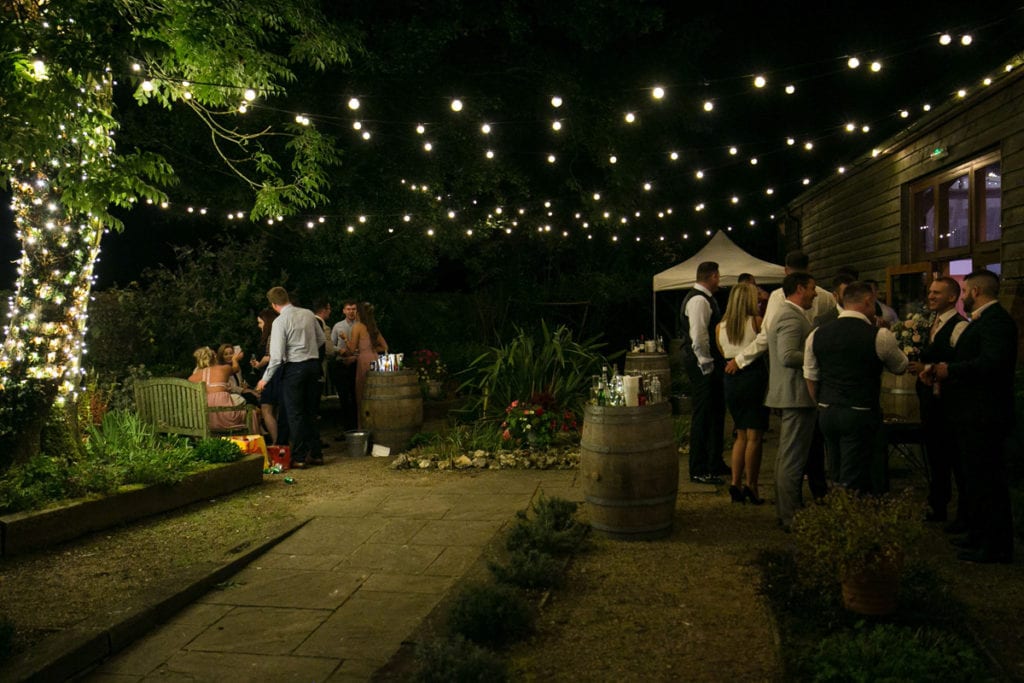
Festoon lighting can transform an outdoor event space quickly and cost-effectively — but only if it’s set up properly. Get the spacing wrong, use the wrong cable spec for the conditions, or underestimate how many lights you need, and the result can look flat or feel underwhelming.
This complete festoon lighting setup guide for outdoor events covers everything you need to plan, install, and manage festoon lighting at UK events — from calculating the number of strings required to understanding IP ratings and power supply requirements. Whether you’re planning a summer festival, a corporate garden party, or a wedding reception under the stars, the principles are the same.
What Is Festoon Lighting and Why Does It Work So Well Outdoors?
Festoon lighting — sometimes called string lights or bulb string lights — consists of a cable with bulb sockets spaced at regular intervals, typically every 30cm to 60cm. The bulbs themselves are usually globe-shaped, ranging from 40mm to 95mm in diameter.
It works well outdoors because it’s versatile, relatively easy to rig, and produces a warm, diffuse glow that suits a wide range of event types. Unlike hard wash lighting or PAR cans, festoon doesn’t require the same level of rigging infrastructure, which makes it practical for temporary outdoor setups.
For UK events specifically, the combination of ambient light and weather-resilience makes good-quality festoon a reliable choice across a long outdoor season — from late spring through to autumn.

How Many Festoon Lights Do I Need for an Outdoor Event?
This is the question most event organisers ask first, and it depends on three things: the size of the space, the coverage density you want, and the rigging method you’re using.
A Practical Starting Point
As a rule of thumb for general canopy coverage:
- Light coverage (ambient atmosphere): 1 string per 3–4 metres of span
- Medium coverage (warm, even glow): 1 string per 2–3 metres of span
- Dense coverage (festival or market-style): 1 string per 1–1.5 metres of span
For a 20m × 10m outdoor space with medium coverage, you’d typically be looking at 4–5 parallel runs of 20m cable, giving you 80–100 metres of festoon in total.
Bulb Spacing
Most commercial festoon cables come with bulbs at 30cm or 60cm intervals. For outdoor events, 30cm spacing tends to give a more consistent light spread and fills the space more evenly. At 60cm spacing, you may need to run cables closer together to avoid dark patches.
Don’t Forget the Drops and Borders
If you’re creating a canopy effect, you’ll need additional cable for the border runs and any vertical drops at the edges. These are easy to overlook when estimating, so add 15–20% to your initial calculation as a buffer.
How to Install Festoon Lights for Outdoor Events
Knowing how to install festoon lights for outdoor events properly is as important as having the right equipment. Poor installation leads to sagging cables, overloaded circuits, and potential safety issues.
Step 1: Plan Your Rigging Points
Before anything else, map out where your anchor points will be. These might be:
- Scaffold uprights or truss
- Timber posts set into the ground
- Existing trees or structures (with appropriate attachment methods)
- Dedicated festoon poles
The span between rigging points will determine how much sag you get in the cable. For runs longer than 8–10 metres, you’ll need either a support cable (catenary wire) running above the festoon, or intermediate support points.
Step 2: Check Your IP Rating
For any outdoor event in the UK, you need festoon lighting rated to at least IP44 — protected against splashing water from any direction. For fully exposed sites or events running through heavy rain, IP65 is the safer choice.
Using indoor-rated festoon outside is a safety risk and will invalidate any relevant insurance or risk assessment. This applies to both the cable and the bulbs.
Step 3: Calculate Your Power Requirements
Each bulb draws a small amount of power, but it adds up quickly across a large installation.
- A standard 25W incandescent globe draws 25W per bulb
- A 1W LED equivalent draws approximately 1–2W per bulb
- On a 10-bulb string with 25W bulbs, you’re drawing 250W per string
For a typical outdoor event with 400 metres of festoon using LED bulbs at 1.5W each with bulbs every 30cm, you’re looking at approximately 200 bulbs, drawing around 300W in total. This is manageable from a single 13A supply, but larger installations will need proper power distribution.
Always use a qualified electrician or AV company to sign off on your power distribution. For temporary structures and events, the relevant guidance in the UK is IET Code of Practice for Temporary Electrical Systems.
Step 4: Install the Catenary Wire (Where Needed)
For any span over 8 metres, install a supporting catenary wire first. This takes the mechanical load off the festoon cable, which is not designed to bear its own weight across long runs.
- Use 3mm or 4mm stainless steel wire
- Tension using wire rope grips or turnbuckles
- Leave a slight sag (around 1:50 ratio of sag to span) to account for thermal expansion and wind movement
Step 5: Run and Dress the Cable
With your rigging structure in place, run the festoon cable along the catenary wire or attach directly to your rigging points using zip ties, S-hooks, or dedicated festoon clips. Keep the cable dressing neat and consistent — uneven spacing between clips leads to irregular sag that looks untidy.
Connect strings in series where possible to reduce the number of individual power feeds needed, but stay within the rated load for each circuit.
Outdoor Festoon Lighting Ideas for Events
The physical setup is only part of it. How you deploy festoon lighting makes a significant difference to the atmosphere it creates.
Canopy Coverage
The most common approach for outdoor events — running parallel strings above the event space to create a ceiling of warm light. Works well for outdoor dining, wedding receptions, and market events.
Perimeter Framing
Running festoon around the edges of a space, along fence lines or tent perimeters, defines the boundary of the event area and adds a warm edge to the environment.
Festoon Combined with Uplighting
Pairing festoon overhead with colour-wash uplighting on key structures — trees, walls, or stage backdrops — gives you depth and visual interest. The festoon provides the ambient warmth; the uplighting gives you colour and drama.
Feature Drops
Vertical drops of festoon from a central high point create a dramatic feature, particularly for festival stages or large outdoor gatherings. This works best with denser bulb spacing.
Pathway Lighting
Low-level festoon along pathways or entrance routes gives a functional use of the product while contributing to the overall atmosphere of the site.
Festoon Lighting Hire for Outdoor Events UK
For most event organisers, festoon lighting hire for outdoor events in the UK is the most practical option. Purchasing a full festoon installation for a one-off event rarely makes financial sense when you factor in the storage, maintenance, and ongoing IP rating compliance.
What to Look for in a Hire Supplier
- IP-rated equipment suitable for outdoor use
- Full power distribution included or available as an add-on
- Rigging support and on-site installation if needed
- Clear terms around damage, replacement bulbs, and electrical sign-off
Typical Hire Costs in the UK (2024–2025)
Festoon lighting hire costs vary depending on the amount of cable, the type of installation, and whether you need rigging support or power distribution included.
- Self-hire festoon kits (basic, no rigging support): £150–£400 for a typical garden event
- Professionally installed festoon for outdoor events: £600–£2,500+ depending on scale, site complexity, and equipment specification
Professionally installed packages will typically include a site visit or assessment, full power distribution, rigging, and pack-down. For larger or more complex sites, this is usually the more cost-effective route when you account for the time and risk involved in a DIY approach.
Common Mistakes to Avoid
These are the issues that come up most regularly when festoon lighting installations don’t go to plan.
Using non-IP-rated equipment outdoors. This is both a safety issue and a practical one — indoor festoon degrades quickly in outdoor conditions and can trip circuits at the worst possible time.
Underestimating the number of strings needed. It’s easy to look at a space on paper and miscalculate. Always physically walk the site before finalising your estimate.
Overloading circuits. Adding more strings to a single feed than the circuit can handle. Always calculate total wattage per circuit before connecting.
No catenary wire on long spans. Without support, festoon cable sags unevenly, stretches over time, and puts stress on the connections.
Leaving power connections exposed. All outdoor power connections should be IP-rated connectors or properly housed in weatherproof junction boxes.
No plan for high wind. Festoon lighting is vulnerable to high winds. For events where weather is a factor, have a plan to take down or secure the installation if conditions deteriorate.
Pro Tips from the Field
- Always bring spare bulbs. Bulbs can fail during setup or at any point during the event. Have at least 10% spare on any installation.
- Use a consistent bulb type throughout. Mixing LED and incandescent bulbs on the same string creates inconsistent colour temperature and brightness.
- Test the full installation before guests arrive. Walk the space with the lights on and check for dark patches, sagging sections, or loose connections.
- Label your circuits. On larger installations, label each power feed at the distribution board so you can isolate sections quickly if needed.
- Build in contingency time for rigging. Festoon always takes longer to install than it looks on paper. Allow at least 50% more time than you think you need.

FAQ
What IP rating do I need for festoon lighting at an outdoor UK event?
For outdoor events in the UK, you need a minimum of IP44 for covered or partially covered environments. For fully exposed outdoor sites, IP65 is the more appropriate specification. Using equipment with a lower IP rating outdoors is a safety risk and may invalidate your event insurance.
How far apart should festoon strings be hung for outdoor events?
For medium-density coverage, hang strings 2–3 metres apart. For a festival or market-style dense canopy, reduce this to 1–1.5 metres. The right spacing also depends on your bulb spacing within each string — 30cm bulb intervals give better fill than 60cm.
Do I need a qualified electrician for festoon lighting at an event?
For anything beyond a small domestic installation, yes. Temporary electrical installations at events in the UK should be designed and signed off in accordance with the IET Code of Practice for Temporary Electrical Systems (formerly BS 7671 / the “Wiring Regulations”). Hire suppliers who handle installation professionally should be able to provide the relevant documentation.
Can I use festoon lighting in the rain?
IP44-rated festoon can handle rain, but you should always check the specific rating of the equipment you’re using. Connections and power distribution need to be equally weatherproofed. If a severe weather warning is in place, it’s worth having a contingency plan to protect or take down the installation.
How much does festoon lighting hire cost for an outdoor event in the UK?
Costs vary significantly depending on scale and specification. A basic self-hire kit for a small garden event can start from around £150–£400. A professionally installed festoon rig for a larger outdoor event typically costs £600–£2,500 or more, depending on the site, cable length, rigging complexity, and what’s included in the package.
Conclusion
A well-planned festoon lighting setup makes a significant difference to how an outdoor event space feels — but the planning has to be right. Getting the IP rating, power distribution, rigging, and cable volume right means the lights do their job reliably from setup through to pack-down, without last-minute problems.
Whether you’re running a small outdoor gathering or a large-scale festival site, the fundamentals of this complete festoon lighting setup guide for outdoor events apply: plan the space properly, use the right equipment for the conditions, and don’t cut corners on electrical safety.
If you’re planning an outdoor event and want to talk through festoon lighting hire options — including installation, power distribution, and full site support — get in touch with the Spotlight Sound team here.


