

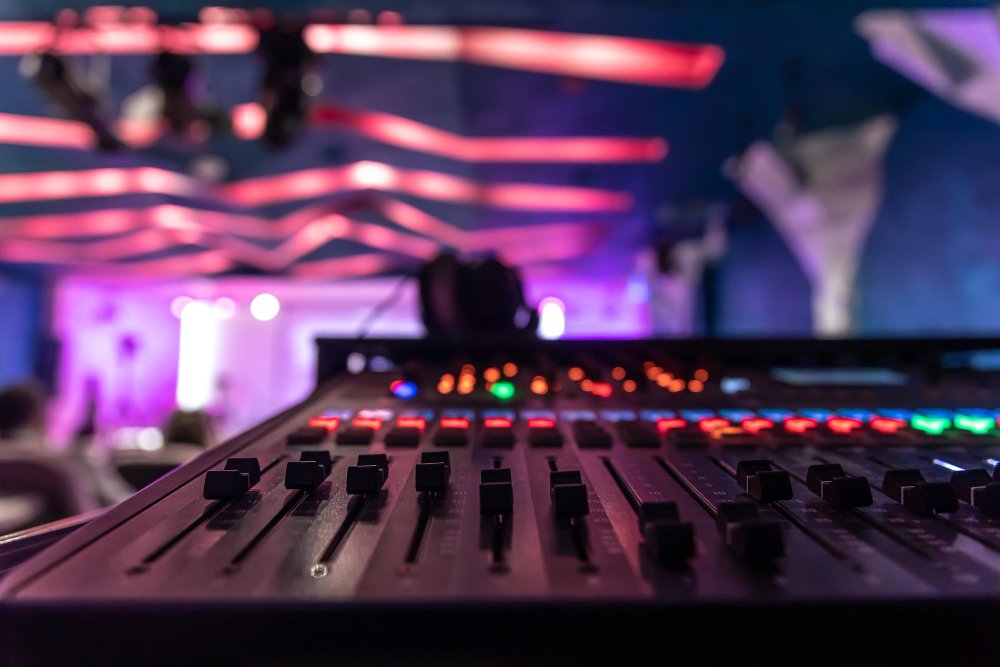
Most people only see an event production company for the two or three hours it takes to run the event itself. The planning that gets a stage, screen or sound system working properly, and the work that packs it all away afterwards, usually goes unnoticed.
Understanding what event production companies do before, during and after an event helps you brief the right partner, plan a realistic timeline and avoid the last-minute problems that come from leaving technical production as an afterthought.
This guide walks through each stage of the process, from the first site visit to the final debrief, so you know what to expect and what questions to ask.
What Does an Event Production Company Do?
An event production company plans, delivers and manages the technical side of an event: sound, lighting, video, staging and the crew who operate it on the day.
Rather than just supplying kit, a good production company works out how an event needs to run, designs a system around that, and stays involved from the first conversation through to the final breakdown.
In practice, this means the work splits into three distinct phases:
- Before the event – planning, design and preparation
- During the event – on-site delivery and live management
- After the event – breakdown, reporting and follow-up support
Each phase has its own checklist, and skipping any of them is usually where problems start.

Before the Event: The Pre-Production Process
Pre-production is where most of the risk in an event gets removed. It’s also the stage clients see the least of, even though it often takes longer than the event itself.
Event Pre-Production Checklist
A typical event pre-production checklist covers:
- Understanding the brief – the format, audience size, venue and objectives of the event
- Site visit or technical survey – checking power, rigging points, access and acoustics
- System design – choosing the right sound, lighting, video and staging setup for the space
- Risk assessment and method statement (RAMS) – identifying hazards and how they’re managed
- Equipment scheduling – booking and testing kit ahead of the event date
- Crew scheduling – confirming technicians, engineers and load-in times
- Client sign-off – confirming the final plan before the event
Planning and Design
This is where the technical solution takes shape. A production company will look at the room or venue, the audience size and the type of event, then design a system that fits, rather than defaulting to a standard package.
For a conference, this might mean working out sightlines for screens and clear speech coverage across the room. For a live event, it might mean planning stage layout, power distribution and crowd safety together.
Site Visits and Technical Surveys
A site visit lets the team check things a floor plan can’t show: ceiling height, power supply, cable routes, load-in access and any acoustic issues in the room.
This stage often uncovers practical issues early, such as a fire exit that limits stage position or a spot where a rigging point is needed for lighting or screens. This kind of detail can also be relevant for wider access and safety obligations under the Equality Act 2010, particularly on sightlines and clear routes through a venue.
Equipment Prep and Logistics
Once the design is agreed, equipment is booked, tested and packed. Cases are checked, cables are tested, and backup units are prepared for anything critical to the event, such as microphones or playback systems.
Logistics also cover transport, parking and load-in scheduling, which matters more than it sounds. A late or badly timed load-in can eat into the time needed for testing before doors open.
During the Event: How Event Production Companies Work on the Day
On the day, the focus shifts from planning to delivery. This is what most clients think of as event production, but it’s built entirely on the preparation that happened beforehand.
What Happens During Event Production
A typical event day includes:
- Load-in and rigging of sound, lighting, video and staging equipment
- Testing and sound checks before doors open
- Briefing crew and running through the show schedule
- Live operation of sound, lighting and video throughout the event
- On-site technical support for speakers, performers or presenters
- Monitoring systems throughout to catch and fix issues before they’re noticeable
On-Site Management and Technical Crew
A crew lead or production manager usually coordinates the technical team on-site, working alongside the client’s event manager or venue staff. This person is the main point of contact if anything needs adjusting during the day.
Where electrical installations are involved, work is carried out in line with the IET Code of Practice, so systems are set up and tested safely for the venue and audience.
Live Problem Solving
Even with thorough planning, things change on the day: a running order shifts, a speaker needs a different microphone, or weather affects an outdoor event.
This is where experienced crew make the difference. Being able to adapt quickly, without the audience noticing, is one of the clearest signs of a production company that knows what it’s doing.
After the Event: Post-Event Production Services
What happens once the audience leaves is just as important as everything that came before it, both for a smooth breakdown and for improving the next event.
What Happens After an Event Finishes
Once an event ends, the production team moves into breakdown and wrap-up. This is usually a quicker but more physically demanding phase, since it needs to happen efficiently to meet venue curfews and next-day bookings.
Post-Event Breakdown Checklist
A standard post event breakdown checklist includes:
- De-rigging sound, lighting, video and staging equipment
- Checking equipment for damage before it’s packed away
- Removing cabling and making good any rigging points
- Venue handover, confirming the space is left as agreed
- Returning or storing hired equipment
- Internal debrief on what worked well and what to improve
Reviews and Reporting
Post event production services often include a short debrief with the client, covering what worked, what could be adjusted, and any recommendations for future events.
This is also where longer-term support gets discussed, such as maintenance for any installed equipment or planning for a recurring event series.
Pro Tips for Working with an Event Production Company
- Book a site visit early, ideally before the venue contract is signed, so any technical limitations are known upfront
- Share the full running order, not just the technical requirements, so the crew can plan around timing changes
- Ask what backup equipment is provided for anything critical, such as microphones or playback
- Confirm load-in and load-out times with the venue directly, not just with the production company
- Request a short debrief after the event, even for smaller events, to capture lessons for next time

Common Mistakes to Avoid
- Bringing in a production company too late, once the venue and date are already fixed with no flexibility
- Treating the technical brief as fixed kit list rather than explaining the outcome the event needs to achieve
- Underestimating load-in and load-out time, especially in venues with restricted access
- Skipping the site visit for a venue the client assumes is straightforward
- Not confirming who the single point of contact is on the day for technical decisions
FAQ
An event production company plans, sets up and manages the technical side of an event, including sound, lighting, video and staging, from initial planning through to on-site delivery and breakdown.
Before an event, the production company carries out a site visit, designs the technical system, books and tests equipment, and confirms crew and schedules with the client.
During the event, the crew handles load-in, rigging, testing, live operation of sound, lighting and video, and on-site technical support for the full duration of the event.
After an event, the team de-rigs and checks equipment, hands the venue back, and usually holds a short debrief with the client covering what worked and any recommendations for future events.
For most corporate or conference events, four to six weeks gives enough time for a site visit, system design and equipment scheduling. Larger or more complex events benefit from longer lead times.
Conclusion
Event production is more than what happens on the day. The planning that goes into a pre-production checklist, the coordination during the event, and the breakdown and reporting that follow all shape whether an event runs smoothly.
Knowing what to expect at each stage makes it easier to brief a production company properly and build a realistic timeline, whether it’s a one-off conference or a recurring event series.


