

Why Audio Quality Makes or Breaks a Corporate Conference
Poor audio can undermine even the most carefully planned corporate event. If delegates can’t clearly hear a keynote speaker, the whole day loses impact — no matter how strong the content.
PA system hire for corporate conferences is one of the most important technical decisions you’ll make in the planning process. Get it right and the day runs smoothly. Get it wrong and no amount of great content can compensate.
This guide covers what audio equipment is needed for a corporate conference, how to choose the right setup for your venue, and why professional PA hire is worth the investment.

What Audio Equipment Is Needed for a Corporate Conference?
The specific kit will depend on your venue, audience size, and the format of the event — but most corporate conferences require a core set of components.
Speakers and Amplification
The main PA speakers deliver sound to your audience. For conferences, line array systems or column array speakers are often the best choice — they provide even coverage across the room without excessive volume at the front.
For larger venues or those with challenging acoustics, delay speakers or fill speakers may be needed to ensure delegates at the back or sides hear clearly.
Microphones
Microphone choice depends entirely on how your event is structured:
- Handheld wireless microphones — useful for Q&A sessions and panel discussions
- Lavalier (lapel) microphones — ideal for presenters who need hands-free movement
- Lectern microphones — a practical choice for fixed-position speakers
- Headset microphones — good for presenters who need both freedom of movement and consistent mic positioning
A well-planned corporate conference typically requires at least two to four microphones, with spares available on the day.
Mixing Desk
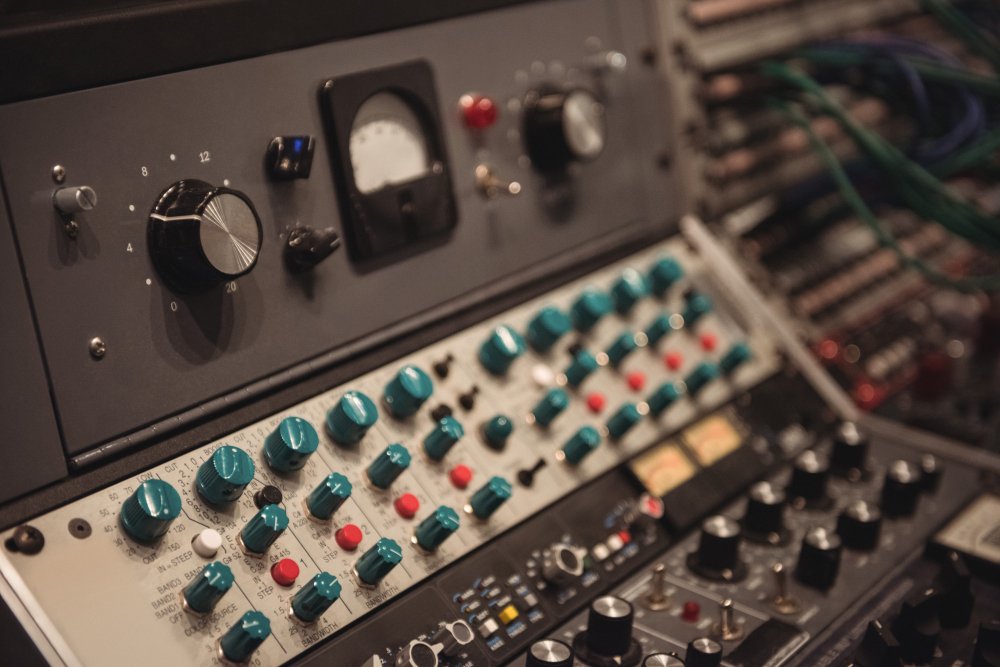
The mixing desk (or digital audio console) is where all audio inputs — microphones, presentation laptops, video playback — are balanced and controlled by a dedicated technician. For conferences with multiple speakers and audio sources, a competent operator at the desk throughout the day is essential.
Presentation Audio Integration
If your conference includes video content, slide presentations with embedded audio, or remote speakers joining via video conferencing software, all of these need to feed cleanly into the PA system. This is a common oversight in conference audio planning, and one that causes real problems on the day if it hasn’t been properly accounted for.
Hearing Loop / Assistive Listening
Venues hosting events for the public should consider whether an induction loop is required. Under the Equality Act 2010, organisations have a duty to make reasonable adjustments for attendees with hearing impairments. A professional AV hire company can advise on what’s appropriate for your event.
Professional PA System Hire for Conferences: What to Expect
When you work with an experienced AV company for professional PA system hire for conferences, the process should be straightforward from the start.
A good supplier will want to understand the venue, the room layout, the number of attendees, and the programme for the day before specifying any equipment. This isn’t over-engineering — it’s the only way to design an audio system that actually works for your specific event rather than a generic one.
You should expect:
- A site visit or detailed technical consultation before the event
- Equipment specified to the venue and audience size
- Delivery, installation, and full sound check on the day
- A trained technician present throughout the event
- Efficient de-rig and collection after the event
If a supplier simply quotes a generic package without asking about your venue or format, that’s worth noting.
Choosing the Right PA System for Your Venue
There’s no single “correct” PA system for corporate conferences — the right choice depends on a number of practical factors.
Room Size and Acoustics
A reflective room with hard walls and high ceilings behaves very differently from a carpeted conference suite with acoustic panels. Speaker placement, SPL requirements, and system design all change accordingly.
As a rough guide:
- Up to 100 delegates: Compact powered speaker systems are usually sufficient
- 100–500 delegates: Line array or column array systems provide better coverage and control
- 500+ delegates: Full line array systems with dedicated amplification and multiple delay zones are typically required
Room Layout and Sightlines
Whether the audience is seated theatre-style, cabaret-style, or in a horseshoe arrangement affects where speakers can be flown or ground-stacked, and how sound needs to be distributed across the space.
Background Noise and Venue Constraints
Venues with significant HVAC noise, outdoor elements, or adjacent function rooms may require higher SPL headroom or directional speaker arrays to maintain clarity. Some venues also have sound limiters fitted — if yours does, your AV company needs to know this in advance.
Why Hire a Professional PA System Rather Than DIY?
It’s tempting to assume that a set of Bluetooth speakers or a basic PA from a consumer hire shop will do the job. For a corporate conference with professional speakers and a programme that runs most of the day, that’s a real risk.
Reliability
Professional PA equipment is built and maintained to handle full-day use. Consumer-grade equipment is not. A speaker dropout or feedback issue during a keynote address reflects directly on the event organiser.
Technical Support on the Day
Hiring PA hire for corporate events from a professional supplier means having a trained technician on site. They manage levels throughout the day, handle microphone changeovers, troubleshoot any issues, and manage audio for video content. That’s not something you can replicate by hiring a box of equipment and hoping for the best.
System Design for the Space
Getting even, consistent coverage across a conference room requires speaker positioning, delay calibration, and EQ that’s matched to the room. That work happens before the event starts and makes an audible difference to everyone in the room.
Common Mistakes to Avoid When Hiring a Conference PA
Even experienced event organisers make avoidable mistakes with conference audio. The most common ones we see:
1. Underestimating the complexity of the room A room that looks straightforward can have significant acoustic problems. Always brief your AV supplier on the venue in detail and, where possible, arrange a site visit.
2. Not accounting for all audio sources Video clips, remote presenters on Teams or Zoom, panel discussion microphones — if these aren’t planned into the audio design from the start, they become problems on the day.
3. Booking equipment without an operator A PA system without a technician is an accident waiting to happen. For anything other than the simplest setup, always book an operator as part of the package.
4. Leaving audio to the last minute Audio requirements should be confirmed at least two to three weeks before the event, not the day before. This gives time to design the system properly, source any specialist equipment, and carry out pre-event testing.
5. Ignoring hearing loop requirements If your event is open to the public or is a large internal corporate event, consider assistive listening. It’s often straightforward to provide and matters greatly to the delegates who need it.
Pro Tips for Getting the Best from Your Conference Audio
Brief your AV supplier on the full running order, not just the venue. Knowing when Q&A sessions happen, how many microphones need to be in play simultaneously, and whether there’s an awards element or live music at the end helps the technician prepare properly.
Request a line check before delegates arrive. A thorough sound check should happen before anyone takes a seat. This is the time to catch issues, not during the opening remarks.
Nominate a point of contact for audio on the day. The AV technician needs to be able to communicate quickly with someone from the organising team. Knowing who to speak to avoids confusion when time matters.
Consider radio mic frequency coordination. If your venue is in a busy urban area or the conference centre hosts multiple events simultaneously, radio frequency coordination matters. A professional AV company will manage this, but it’s worth raising during the planning conversation.
Think about recording. If you need a recording of the day’s proceedings for internal use or distribution, this is much easier to arrange alongside the live audio setup than as an afterthought.

FAQ
How much does PA system hire for a corporate conference cost in the UK?
Costs vary significantly based on venue size, duration, and the complexity of the setup. A half-day conference for 100 delegates with a basic microphone setup and an operator might start from around £500–£800. Full-day events for 300+ delegates with multiple microphones, presentation audio integration, and a full-day technician typically range from £1,500 to £4,000 or more. Always request a quote based on your specific requirements rather than assuming a package price applies.
How far in advance should I book a PA system for a corporate event?
For most corporate conferences, booking four to six weeks in advance is sensible. For larger events or peak periods (particularly autumn conference season from September to November), earlier is better. This also allows time for a site visit and proper system design.
Do I need a sound technician for my conference?
For anything beyond a very simple single-speaker setup, yes. A trained technician manages microphone levels, handles changeovers between speakers, integrates video and presentation audio, and troubleshoots any issues in real time. Trying to run conference audio without technical support is one of the most common causes of avoidable problems on the day.
What is the best type of microphone for a conference speaker?
It depends on how the speaker presents. Lavalier (lapel) microphones work well for speakers who move around or gesture frequently. Headset microphones offer similar freedom with more consistent pickup. For speakers who stay at a lectern, a fixed lectern microphone is often the simplest and most reliable choice. For panel discussions, a combination of table microphones and handheld wireless mics is usually the most practical setup.
Can corporate conference PA systems integrate with video conferencing software like Zoom or Teams?
Yes, and this is increasingly a standard requirement for hybrid corporate conferences. It requires careful integration between the PA system and the conferencing platform, typically via a dedicated audio interface or direct connection from the mixing desk. It’s important to brief your AV supplier on this requirement during the planning stage so it’s designed into the system from the start, not retrofitted on the day.
Conclusion
Getting the audio right at a corporate conference takes more than simply booking a speaker system. It requires understanding the venue, designing the system around the specific programme, and having experienced technical support throughout the day.
PA system hire for corporate conferences works best when the supplier is brought into the planning process early — when there’s still time to ask the right questions, specify the right equipment, and ensure everything is ready well before the first delegate walks in.
Whether you’re organising a single-day conference for 80 people or a multi-room event for several hundred, the same principles apply: clear audio, reliable equipment, and a technician who knows what they’re doing.


