

Introduction
This guide brings together the main elements of theatre lighting design and suggests different approaches to creating stage lighting effects. Along the way, it raises the important questions worth asking yourself when planning theatre lighting.
What Effect Is the Lighting Having?
Theatre lighting is much more than providing illumination so the audience can see the stage — though that remains a crucial part of it. Light is used to portray time, location, atmosphere, and mood.
When creating theatre lighting, designers need to consider the time and location of the production: both its period and genre, and the actual setting of the performance. The lighting needs to reflect the production’s historical, social, and cultural context. Considering when and where the production is set, as well as its setting, will help you create quality theatre lighting designs.
Lighting has a significant effect on the mood and atmosphere of a production, and on what the audience feels. Different types of lighting create different moods, and colour is one way to achieve this. Blue light, for instance, is frequently used to create a cold or night-time effect. Brightness, or lighting level, is another tool — an atmosphere of mystery can be created with low-intensity lighting and shadow.
Designing Theatre Lighting
When designing lighting for theatre, consider what the purpose of the light is. Is it to portray time, location, mood, or atmosphere — or all of these at once? Ask why the playwright chose a particular time or place for a scene, and what they were trying to convey. The answers will shape your lighting design.
Start noticing how light looks in different settings, at different times, and in varying weather. Compare examples: how does fluorescent light compare to candlelight? What are the differences between sunrise and sunset? What changes when bright sunlight is suddenly blocked by cloud? Use what you notice to inform better theatre lighting.
Everything on a stage is there for a reason, and lighting is no different. Making informed, deliberate decisions about lighting will enhance the audience’s experience.
What Is the Style of Theatre Lighting?
A range of styles is used in theatre productions, and your lighting design needs to fit the style of the piece. To do that, you first need to recognise the style being used. Common production styles include the following.
Realism
Productions based on a realist style use elements designed to resemble real life, and the realism can be total or partial. Total realism strives to create a production that looks as much like real life as possible. Lighting designs for realist productions need to replicate real-life lighting situations, which can be challenging to achieve. The partial realist style combines realistic elements with others that are not so realistic.
Symbolism
Productions based around symbolism focus more on communicating ideas to the audience than on depicting real life. In a symbolist production, the lighting designer can use light to communicate — altering colour, for instance, or using spotlights to highlight a particular aspect or character.
Minimalism
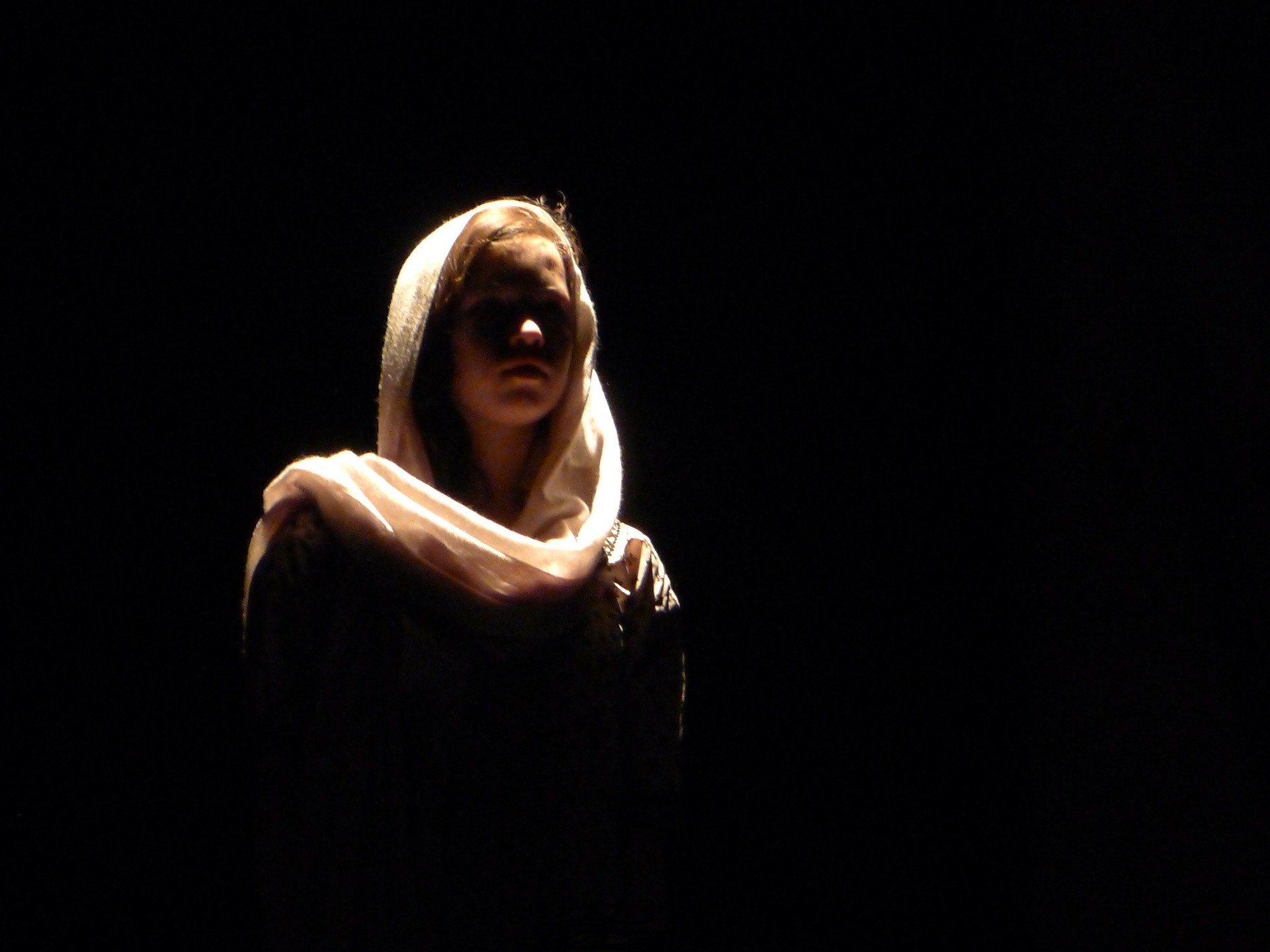
In a minimalist production, the set and props may be very sparse or non-existent, and the production often relies on the performers to create the entire experience. Lighting is heavily relied on in minimalist productions, often to create the whole setting. For this reason, lighting on minimalist productions is often quite complex.
Fantasy
With fantasy productions, the lighting designer may be able to use effects not usually suitable elsewhere, including a wider range of colours, strobe, and internal lighting. When using strobe lighting, you’ll need to consider the audience’s reaction, so be careful not to overuse it. Even in a fantasy, the audience still needs to be able to relate to the effect the lighting is portraying.
The Lighting Designer’s Decisions
As a lighting designer, it’s your job to decide what parts of the stage to show the audience, and to consider the effect those decisions have. Lighting decisions include the following.

Colour
The colour of lighting can be altered with pieces of coloured plastic, known as lighting gels, placed over the light source. Different colours change the mood and create different effects — a fire or inferno can be portrayed with red and orange lighting to suggest the flames.
Different colours also carry different meanings for an audience. Blue is associated with cold, like the bluish look of ice. Yellow gives a warmer atmosphere, like the glow of the sun.
Intensity
Theatre lighting isn’t simply on or off — you can adjust the intensity (brightness) to create the effect you want. Intensity levels are generally rated from 1 to 100, and this range lets the lighting designer balance light evenly across the whole stage.
Focus
A light’s focus refers to the definition of its beam. With theatre lighting, you can alter the beam’s size and edge, giving it sharp or soft definition. Soft edges are suitable for blending different light sources, while a sharp-edged beam can spotlight a particular character.
Shadow
As well as controlling what the audience can see, the lighting designer can use shadow to create hidden spaces. Shadow can build compelling atmospheres and moods, or suggest something about a character’s personality — someone emerging from darkness might be read as untrustworthy.
‘Read’ the Stage
In any production, we want the audience to read the stage — to see what is significant and essential to the plot. Lighting designers need to understand the stage in the same way, deciding what is important for the audience to see. Reading the stage like this will inform your decisions on the most effective lighting design.
Blackouts and Transitions
A production will very rarely have only one lighting state. Moving from one state to another is called a transition. These changes can happen instantly, or slowly and subtly, to create a particular effect. Instant, or snap, changes can be used to shock the audience, while a slow transition may not be noticed until the result is clear. Gradual transitions are useful for changing the mood or indicating the time of day.
A blackout is when the stage is in complete darkness. Blackouts can signal to the audience that the play has finished, or mark a significant change of time or location. A blackout is also used for changing scenery, though you should consider providing light for the crew to work — and allowing the audience to watch a scene change is one way of holding their attention during the pause.
Audience Consideration
To grasp theatre lighting design, it helps to understand how lighting affects the audience’s experience.
One crucial factor is the audience’s position relative to the stage. Theatres come in various layouts, such as traverse, end-on, thrust, or in-the-round, and the nature of the performance — immersive, promenade, or site-specific — also affects the setup.
This perspective guides where you place your lanterns: overhead, above the audience, on the stage floor, or in the wings. Each configuration brings its own challenges, including the need to avoid obstructing the audience’s view. For in-the-round productions, it’s essential to prevent light shining directly into the audience’s eyes. Unwanted light spillage, known as “spill,” is a particular risk in thrust, traverse, and in-the-round setups.

Consider the Experience Being Created
Lighting can be used to give the audience a particular experience. Very bright light can shock an audience or make them feel uncomfortable — depicting lightning is one example. Use this carefully, as strong light can also break the spell and remind the audience they’re sitting in a theatre rather than immersed in the plot. Low lighting levels, by contrast, encourage the audience to concentrate more closely.

Sound Hire
Our sound equipment includes mixers, speakers, microphones, comms, cables and more

Lighting Hire
Intelligent, moving lights, generic lighting, LED & outdoor lights, control, dimming and lighting cable
Video Hire
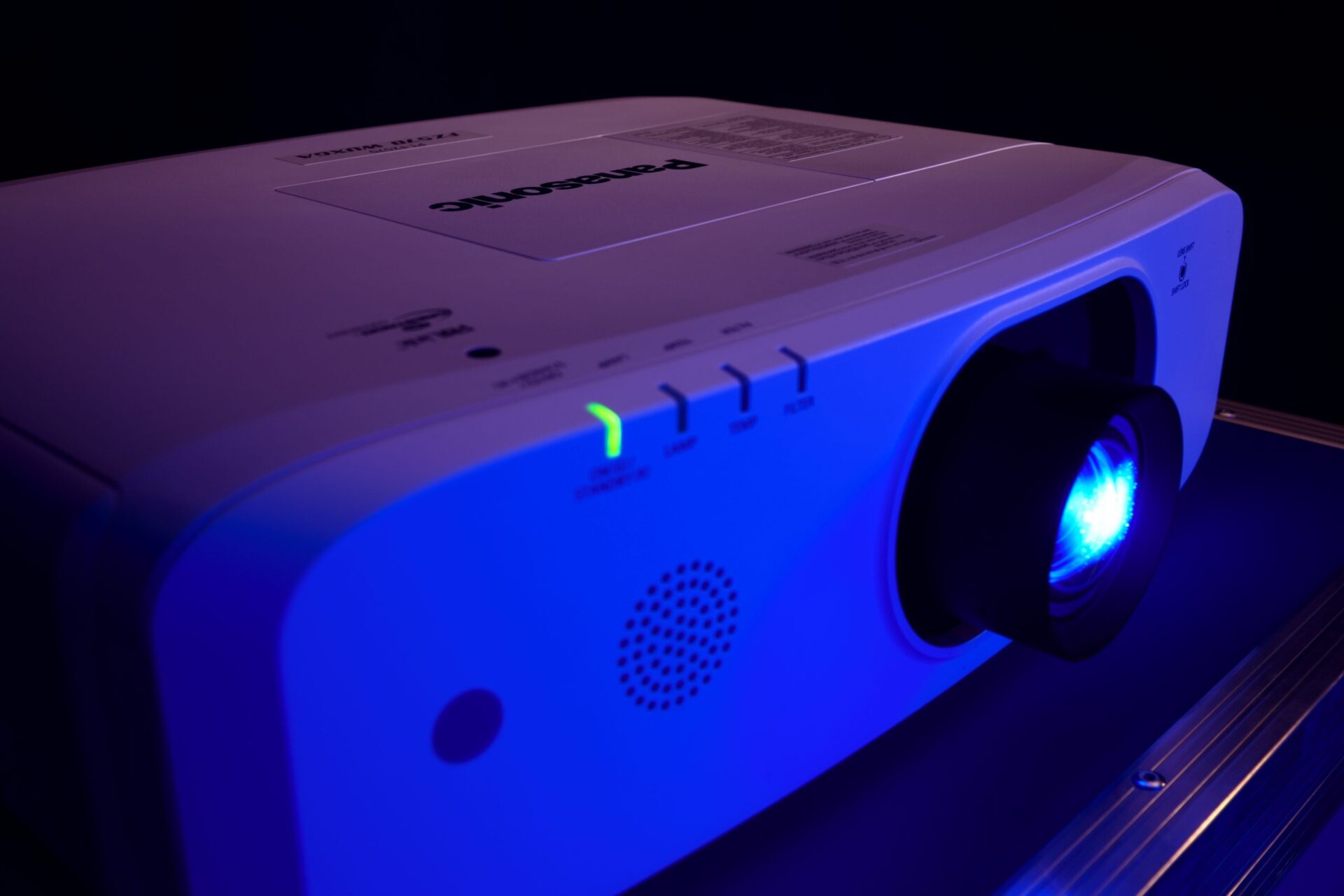
Projectors and screens, TV screens, stands, mount and brackets, video switching and cabling

Stage Hire
We stock a variety of stage sizes and shapes to create small or large structures.

Special Effects Hire
Special effects including smoke, snow, low fog, foam and CO2. We stock a huge range of effects.
Theatre Lighting Design Tips
Good theatre lighting design comes down to a handful of practical habits, applied consistently. The tips below make the biggest difference to how a production reads from the seats — useful whether you’re lighting a school play, a fringe show, or a full main-house production. Whether you call it theatre or theater lighting design, the principles are the same.
Light the face first. The audience needs to read expression before anything else. Get clean, even light on performers’ faces at acting height, then build the rest of the design around that. A beautiful wash means little if the lead’s eyes are in shadow.
Design from the back of the stage forward. Backlight separates performers from the set and stops the stage looking flat. Set your backlight and toplight early, then layer front light over it — not the other way around.
Plan transitions before you plot individual cues. Decide how scenes move into each other — a slow fade, a snap blackout, a cross-fade — before you start setting levels. Transitions are where most amateur lighting falls apart, because they’re treated as an afterthought.
Use colour with restraint. A small number of well-chosen colours reads as intentional. Too many competing tints read as messy. Pick a palette that supports the mood and stick to it, varying intensity rather than constantly changing hue.
Cover the whole stage, not just the centre. Performers move. Light the acting area evenly so an actor doesn’t walk out of their light mid-line. Check the edges and upstage corners, not just the obvious downstage-centre spot.
Work your angles deliberately. Front, side, top, and back light each do a different job. Front light flattens; side light sculpts; backlight separates; toplight isolates. Knowing what each angle does lets you shape a performer in three dimensions.
Balance intensity across the rig. A single over-bright fixture pulls the eye and unbalances the picture. Set levels relative to each other, and view the whole stage as one image rather than a collection of separate lights.
Check sightlines from real seats. What looks right from the lighting desk can look wrong from the front row or the side of the circle. Walk the auditorium during plotting and check the picture from the extremes.
Document the rig and the cues. Keep a clear plan of what’s patched where, what each cue does, and why. It saves hours when something needs changing, and means anyone can operate or rebuild the show.
Rehearse lighting with the performance. Lighting plotted in an empty theatre rarely survives contact with actual blocking. Sit through a technical rehearsal with the cast and adjust timing and levels against what’s happening on stage.
Stage Lighting Effects and Techniques
Stage lighting effects are the specific techniques a designer uses to shape what the audience sees, beyond simply making the stage visible. Most theatrical stage lighting relies on a small set of repeatable effects, combined in different ways. The table below covers the most common ones, how each is produced, and where they’re typically used.
|
Effect |
How it’s created |
Typical theatrical use |
|---|---|---|
| Gobo projection | A thin metal or glass disc with a pattern cut into it, placed in the gate of a profile fixture | Projecting windows, foliage, bars, or textured backgrounds onto the stage or set |
| Wash | Several fixtures with softened or overlapping beams covering a broad area in even light | Filling the acting area, setting a base colour, lighting a whole scene at once |
| Backlight / silhouette | Fixtures rigged behind and above performers, aimed toward the audience | Separating performers from the set; strong backlight with no front light makes a full silhouette |
| Footlighting | A row of low fixtures along the front edge of the stage, lighting upward | Period and music-hall looks; softening facial shadows cast by steep toplight |
| Breakup (dappling) | A broken or irregular gobo pattern projected over an area | Suggesting leaves, water, or texture without depicting a literal scene |
| Strobe | A fixture that flashes at rapid, set intervals | Freezing motion, simulating lightning, or marking a sharp dramatic shift |
| Blackout | All lighting states cut to zero, usually instantly | Ending a scene, marking a beat, or covering a fast set change |
| Haze / atmosphere | A fine, even particle suspension in the air from a hazer | Making beams of light visible; adding depth to backlight and side light |
A few of these work hardest in combination. Haze plus backlight, for example, is what makes a beam of light read as a solid shaft across the stage. Cross-fading between two lighting states — one fading down as another fades up — is the most common way to move between scenes without a hard blackout.
Theatre Lighting Positions and Fixture Types
Two things determine how lighting in theatre actually reaches the stage: where the fixtures are positioned, and what type of fixture is used. Understanding both is the difference between a design that looks intentional and one that’s simply bright.
Common Theatre Lighting Positions
Front light comes from the front of house, roughly at 45 degrees above and to each side of the performer. It makes faces visible and readable. Used alone it tends to flatten features, which is why it’s usually balanced with light from other angles.
Backlight comes from behind and above the performer, aimed toward the audience. It separates performers from the set or backdrop and adds a sense of depth. It’s one of the most useful and most under-used positions in amateur design.
Side light comes from the wings at performer height, often used in pairs from both sides. It sculpts the body and is especially important in dance, where it shows the line and movement that front light alone would flatten.
Top light (downlight) comes from directly above. It isolates a performer or area and creates strong, dramatic shadows. Useful for picking out a single figure or defining a tight pool of light.
Footlight comes from the front edge of the stage, lighting upward. Historically the main light source in theatres, now used more selectively for period looks or to fill the shadows that steep toplight creates under the brow and chin.
Types of Theatre Lighting Fixtures
Profile (ellipsoidal) fixtures produce a hard-edged, controllable beam that can be shaped with internal shutters and focused sharply. They’re the standard choice for gobos, for lighting a precise area, and for any situation where you need a clean, defined edge.
Fresnel fixtures produce a soft-edged beam that blends easily with neighbouring fixtures. They’re the workhorse for washes and general cover, where you want even light without a visible edge.
PAR fixtures produce a fixed, oval beam and put out a lot of light for their size and cost. They’re widely used for colour washes, backlight, and band or concert work where punch matters more than precise shaping.
Flood and cyclorama fixtures spread light over a wide area and are used to light backdrops and cycloramas evenly, often in colour to set a sky or background tone.
Moving heads (intelligent fixtures) can change position, colour, beam shape, and gobo remotely from the lighting desk. They cover several roles from a single unit and are common in concerts, larger productions, and shows where lighting changes dramatically through the performance.
Most productions combine fixture types — profiles for the precise work, Fresnels and PARs for the washes, and floods for the backdrop. If you’re sourcing equipment for a production, our theatre and stage lighting hire covers all of these fixture types, and our team can advise on the right mix for your venue and show.
Frequently Asked Questions
What is the purpose of theatre lighting?
Theatre lighting has four core jobs: making performers and the action visible, directing the audience’s attention to where it needs to be, establishing mood and atmosphere, and indicating time and place. A good lighting design does all four at once, without the audience consciously noticing the lighting itself.
What are the controllable qualities of stage lighting?
Stage lighting has four main controllable qualities: intensity (how bright), colour (the tint or hue), direction (the angle the light comes from), and focus (how hard or soft the edge is, and what area it covers). A lighting designer shapes a production by adjusting these four properties across the rig.
What’s the difference between theatre lighting and stage lighting?
The terms are used interchangeably. Theatre lighting usually implies a theatre venue and the conventions of dramatic productions, while stage lighting is broader and includes concerts, corporate stages, and live events. The underlying principles of angle, colour, intensity, and focus are the same across both.
What do lighting designers use to colour stage lights?
Designers colour conventional fixtures using gels, thin heat-resistant coloured sheets placed in front of the lens. LED and intelligent fixtures mix colour electronically from internal red, green, blue, and sometimes amber or white emitters, so no physical gel is needed. Both approaches let a designer match a precise colour to the scene.
What is a gobo in theatre lighting?
A gobo is a thin metal or glass disc with a pattern cut or etched into it. Placed in the gate of a profile fixture, it projects that pattern onto the stage, commonly used to create the look of windows, foliage, prison bars, or textured backgrounds without building physical scenery.
How many lights does a theatre production need?
It depends entirely on the venue size, the staging, and the complexity of the show. A small studio production might use 12 to 24 fixtures; a mid-scale production 40 to 100; a large main-house show several hundred. The number matters less than covering the key angles for every acting area.
What’s the difference between a profile and a Fresnel?
A profile fixture produces a hard-edged, shapeable beam and is used for precise work and gobos. A Fresnel produces a soft-edged beam that blends easily with others and is used for washes and general cover. Most productions use both: profiles where you need control, Fresnels where you need even, blended light.
For more on theatre lighting, or help specifying a system, get in touch. We provide lighting installation for many sectors and use equipment from recognised theatre brands such as ETC and Zero88.


