

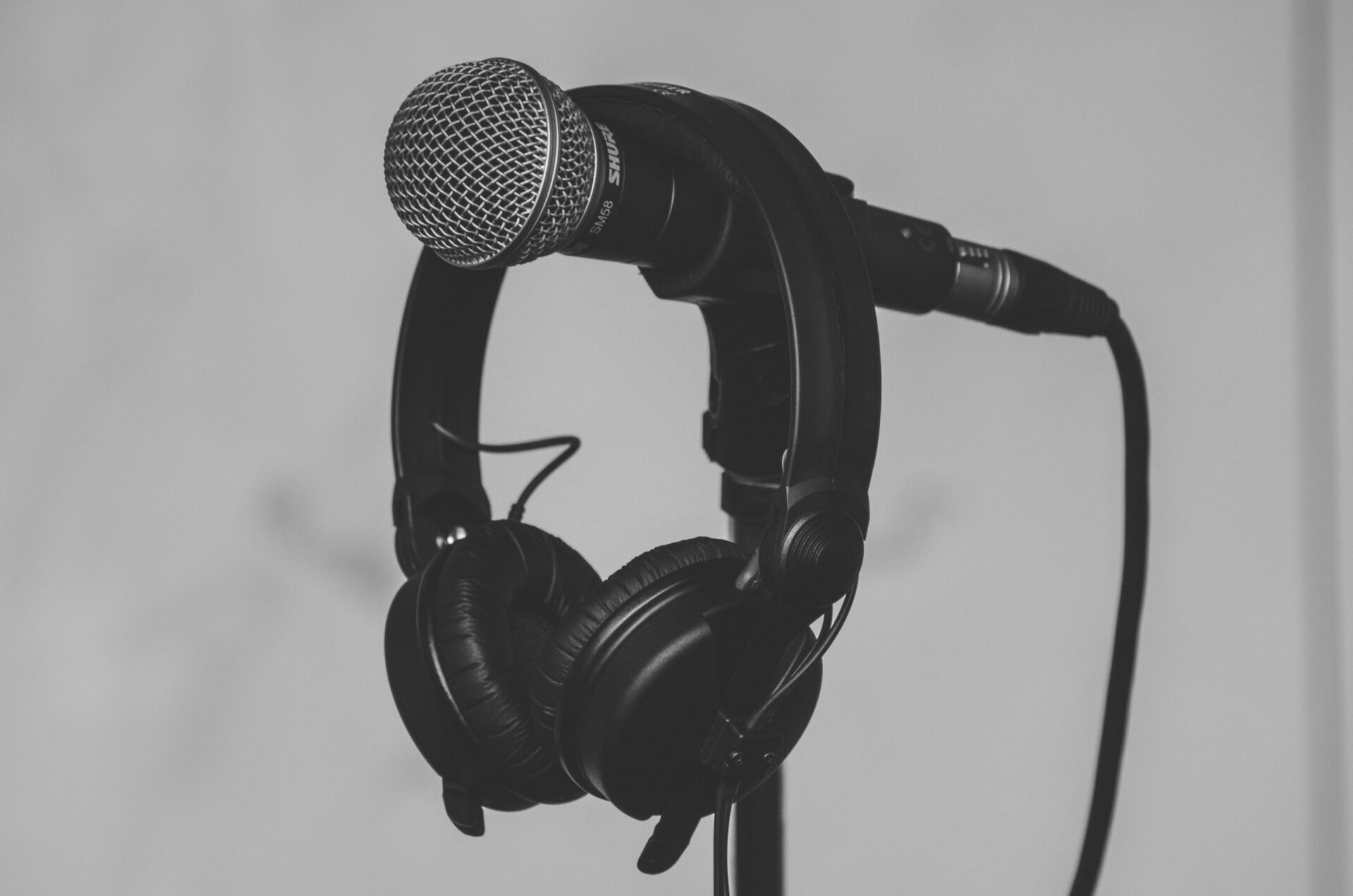
Sound and audio are two terms that are often used interchangeably — but they describe fundamentally different things. Sound is mechanical wave energy: a physical disturbance travelling through an elastic medium such as air, water, glass, metal, or wood. Audio, by contrast, is the electronic representation of that sound — an electrical or digital signal that can be captured, stored, manipulated, and reproduced using equipment.
Understanding the difference between audio and sound is not just an academic exercise. It is the foundation of how microphones, mixing desks, PA systems, and AV installations work. Whether you are setting up a live event or designing a permanent sound installation, working fluently across both domains is essential.

What Is Sound?
Sound begins the moment an object vibrates. That vibration disturbs the surrounding medium — most commonly air — creating a longitudinal pressure wave that propagates outward from the source.
As this sound wave travels through the air, the particles within it alternate between regions of compression (where particles are pushed together) and rarefaction (where they spread apart). The rate at which this compression-rarefaction cycle repeats per second is the frequency of the sound, measured in Hertz (Hz).
The human ear can detect sounds across a broad frequency range — from as low as 20 Hz up to 20,000 Hz (20 kHz). Sounds below this range are called infrasound; those above it are ultrasound — both exist physically but are inaudible to humans.
Amplitude and Volume
The degree of pressure change between the peak (compression) and trough (rarefaction) of a sound wave is its amplitude. Amplitude is what we perceive as volume — a greater amplitude means a louder sound. The wavelength is the physical distance covered by one complete wave cycle, measurable from peak to peak or trough to trough.
Sound Waves and Wavelength
Every sound wave has a wavelength inversely proportional to its frequency. High-frequency sounds have short wavelengths; low-frequency sounds have long ones. This relationship directly affects how sound behaves in physical spaces — which has major practical implications for acoustic design and PA system placement.
What Is Audio?
Audio is sound that has been converted into an electrical or digital signal. The word ‘audio’ comes from the Latin audire — to hear — but in technical use, it refers specifically to the electronic form of sound rather than the raw acoustic phenomenon.
When a microphone captures the pressure variations of a sound wave, it converts that mechanical energy into a fluctuating electrical voltage. That voltage is audio. From that point, the signal can be amplified, processed, mixed, stored, and transmitted — none of which is possible with sound in its raw acoustic form.
Analogue vs Digital Audio
Audio exists in two fundamental forms:
- Analogue audio is a continuously varying electrical voltage that mirrors the shape of the original sound wave. It is used in traditional recording equipment, vinyl records, and analogue mixing consoles. Analogue audio degrades with each copy and is susceptible to noise and interference.
- Digital audio converts the analogue voltage into binary data (0s and 1s) using an Analogue-to-Digital Converter (ADC). Once in digital form, the audio can be copied without quality loss, edited non-destructively, and transmitted over networks. Digital audio is the standard for modern recording, broadcasting, and live event production.
How Audio Is Stored and Transmitted
Digital audio files store binary data in formats such as WAV, AIFF, MP3, or FLAC. The quality of a digital audio recording is determined by two parameters:
- Sample rate — how many times per second the analogue signal is measured (44,100 Hz is CD standard)
- Bit depth — the precision of each measurement (16-bit or 24-bit are common)
Audio can be transmitted via physical cables, wireless RF systems, or digital networks — all of which are core to professional AV infrastructure.
Sound vs Audio — The Core Difference Explained
Sound is mechanical wave energy that travels through a physical medium such as air, water, or solid materials. Audio is the electrical or digital representation of that sound, captured via a transducer such as a microphone. The key difference is their form of energy: sound is acoustic and physical; audio is electronic and recordable.
Key Differences at a Glance
Table: Audio vs Sound — key property comparison (Caption for SEO: ‘Difference between audio and sound’)
|
Property |
Sound |
Audio |
|---|---|---|
| Nature | Mechanical wave energy | Electrical / digital signal |
| Form | Pressure wave | Analogue voltage or binary data |
| Medium | Air, water, solid materials | Cables, digital files, wireless |
| Measurable as | Frequency (Hz), amplitude | dB SPL, bit rate, sample rate |
| Can be stored? | No | Yes |
| Can be manipulated? | Limited (acoustically) | Yes — fully editable |
| Transmitted electronically? | No | Yes |
| Produced by | Vibrating objects | Microphones, synthesisers, ADCs |
When to Use Each Term
Use ‘sound’ when referring to the physical, acoustic phenomenon — the noise a speaker makes, the way a room resonates, the volume level experienced by an audience.
Use ‘audio’ when referring to recorded, transmitted, or electronically processed signals — an audio file, an audio interface, an audio feed from a mixing desk. In professional AV practice, both terms are in constant use and their distinction matters for accurate communication with engineers and installers.
How Sound Becomes Audio — The Conversion Process
The transformation from sound to audio is at the heart of all recording, broadcasting, and live event production. Understanding this process demystifies how every microphone, audio interface, and PA system works.
The Role of Transducers
A transducer is any device that converts energy from one form to another. In audio, the two key transducers are:
- Microphones — convert acoustic sound pressure waves into electrical voltage (sound → audio)
- Loudspeakers — convert electrical audio signals back into sound pressure waves (audio → sound)
This conversion is the invisible step that most people never consider. When a vocalist sings into a microphone, their voice creates sound waves. The microphone diaphragm vibrates in response to those pressure changes, generating a corresponding electrical signal. That signal is audio.
From Microphone to Digital File
Once sound has been converted to an analogue audio signal by a microphone, the typical signal chain in a professional setting is:
- Microphone — captures acoustic pressure, outputs low-level analogue voltage
- Preamplifier — boosts the low-level signal to line level
- Analogue-to-Digital Converter (ADC) — samples the voltage thousands of times per second and encodes it as binary data
- Digital Audio Workstation (DAW) or recorder — stores, edits, and processes the digital audio file
- Digital-to-Analogue Converter (DAC) — converts the digital file back to analogue voltage for playback
- Power amplifier + loudspeaker — amplifies the signal and converts it back to sound
This chain is present in every professional live event, recording studio, broadcast facility, and permanent AV installation. At Spotlight Sound, our engineers design and manage this entire signal chain — from acoustic treatment of the space through to the final speaker output.
Sound Waves, Frequency & Acoustics

Sound Waves, Frequency & Acoustics
Acoustics — the science of sound behaviour
Acoustics is the branch of physics concerned with the behaviour of sound — how it is created, how it travels, and how it interacts with physical environments. Different materials respond very differently to sound waves:
- Hard, dense surfaces (concrete, brick, glass) reflect sound, causing reverberation and echo
- Soft, porous materials (acoustic foam, fibre wool panels, heavy curtains) absorb sound, reducing reflections
- Perforated or diffusive surfaces scatter sound, creating a more even distribution
When designing a room for optimal acoustic performance — whether a concert hall, a conference room, or a house of worship — the choice of surface materials is as important as the PA system itself.
Ambient Noise and Acoustic Treatment
Ambient noise refers to any unwanted sound present in a space — from HVAC airflow to traffic noise bleeding through walls. Effective acoustic treatment can significantly reduce ambient noise and control reverberation time, but completely eliminating it is rarely achievable outside of specialist environments such as anechoic chambers.
For permanent AV installations, acoustic assessment should always precede equipment selection. The best speakers and amplifiers will underperform in a poorly treated space.

How This Applies to Professional AV and Event Production
Understanding the distinction between sound and audio is fundamental to professional event production and AV installation. Our engineers at Spotlight Sound operate across both domains simultaneously — managing the acoustic properties of the physical space (sound) while engineering the audio signal chain from source to output (audio).
Whether we are designing a PA system for a live corporate event, installing a permanent audio system in a venue, or managing a hybrid event broadcast, the principles on this page form the technical foundation of everything we do. If you are planning an event or a permanent installation and want to discuss your audio requirements, get in touch with our team.


